
Hey there, fellow healthcare heroes and curious minds! In our ever-evolving world, the faces we see in our hospitals and clinics are becoming more diverse than ever.
It’s truly amazing, but let’s be honest, it also brings a unique set of challenges and incredible opportunities for us as nurses. I’ve personally seen how a little understanding of someone’s background can make all the difference, transforming a routine interaction into a moment of genuine connection and effective care.
Beyond just knowing about different customs, it’s about building trust, bridging communication gaps, and ultimately, ensuring every single patient feels truly seen and respected.
It’s not just a nice-to-have; it’s essential for outstanding patient care in today’s globalized healthcare landscape. We’ll get into the specifics and explore practical tips right here.
Beyond Words: Deciphering Non-Verbal Language in Patient Care

When you’re working with patients from incredibly diverse backgrounds, it’s easy to focus solely on the spoken word, especially if there’s a language barrier.
But in my experience, sometimes the most profound communication happens without a single word being uttered. I’ve personally found that truly paying attention to non-verbal cues – a patient’s posture, their gestures, how they use or avoid eye contact, and even their reaction to personal space – can tell you volumes about what they’re feeling, their comfort level, and what they might be trying to express.
It’s not just about understanding their words; it’s about understanding their world, and that often involves tuning into these silent signals. Over the years, I’ve realized that a patient who might seem withdrawn could actually be showing respect, and a lack of direct eye contact isn’t always a sign of dishonesty, but perhaps deference.
This understanding has really changed how I approach my assessments and interactions, making them so much more empathetic and effective. It’s a skill that develops over time, I’ve noticed, requiring not just observation but a genuine curiosity about another person’s cultural lens.
The Subtle Art of Eye Contact: When Less is More
You know how we’re often taught that direct eye contact signifies honesty and engagement? Well, that’s not a universal truth, and I’ve seen it play out in my daily work.
I remember a time when I was trying to explain a complex medication regimen to a young man, and he kept looking down or just past my shoulder. My initial reaction was a bit of frustration, thinking he wasn’t paying attention.
But then, remembering some cultural sensitivity training, I realized that in his culture, avoiding direct eye contact with authority figures, especially an older female, was actually a sign of respect.
Once I shifted my internal narrative and recognized this, I felt so much more at ease, and I believe he did too. It immediately eased the tension, and we were able to have a much more productive conversation.
It truly hits different when you understand these nuances, transforming a potentially awkward moment into one of mutual respect and better care. It reminds me that our own cultural norms are just one piece of a much larger puzzle.
Personal Space: An Unspoken Boundary
Oh, the invisible bubble of personal space! This is another one that constantly reminds me how varied human comfort levels are. For some, a close proximity feels warm and reassuring, while for others, it can feel invasive and threatening, especially when they’re already feeling vulnerable in a hospital setting.
I’ve had experiences where I’ve inadvertently stepped too close, only to see a patient visibly stiffen or pull back slightly. These days, I make a conscious effort to observe how patients react when I approach, giving them a bit more room initially and then adjusting based on their cues.
It’s about respecting their boundaries, even if they aren’t verbally expressed. I’ve found that a simple, slow movement or asking permission to touch someone before an examination can make an enormous difference in building trust.
It’s a small gesture, but it can profoundly impact a patient’s sense of safety and control, which is huge when they’re in an unfamiliar environment.
Beyond the Plate: Honoring Diverse Dietary and Religious Needs
In a busy hospital, it’s easy to think of a patient’s diet as just, well, a diet. But I’ve learned that for so many people, food is deeply intertwined with culture, religion, and even their very identity.
Over the years, I’ve seen firsthand how challenging it can be for patients when their specific dietary needs, stemming from religious observances or deeply held cultural beliefs, aren’t fully understood or accommodated.
It’s more than just a preference; it can be a source of significant distress or even conflict if overlooked. I once cared for a patient who was fasting for Ramadan, and while our kitchen staff did their best, there was a miscommunication about the timing of her meals.
It led to her feeling unheard and quite upset. From then on, I made it a point to personally double-check with dietary services and the patient directly, to ensure her sacred practices were fully supported.
It’s a little extra effort, but the peace of mind it brings the patient is absolutely invaluable, and it truly enhances their healing process when they feel seen and respected in every aspect of their lives.
Food as Connection: More Than Just Sustenance
For many of our patients, food isn’t just fuel; it’s a powerful connector to their family, their heritage, and their spiritual beliefs. Think about the significance of specific foods during holidays or for certain rituals – it’s profound.
I’ve learned to really appreciate this, especially when I see families trying to bring in traditional dishes for their loved ones, even when it’s technically against hospital policy.
Instead of just shutting it down, I try to find a middle ground, perhaps coordinating with the charge nurse or dietary staff to see what small, safe accommodations can be made.
It’s not about breaking rules, but about understanding the emotional and spiritual nourishment these foods provide. I’ve found that even a small taste of something familiar can dramatically lift a patient’s spirits, reducing their anxiety and helping them feel more at home in a sterile environment.
This kind of flexibility, when safe and possible, truly makes a difference in holistic care.
Respecting Sacred Rituals: From Prayer to Passing
Beyond diet, religious and spiritual practices permeate so many aspects of a patient’s life, especially during times of illness and vulnerability. From daily prayer times that need quiet space to specific rituals around personal hygiene or even end-of-life care, these practices are deeply personal and critically important to a patient’s well-being.
I remember a particularly poignant situation with a patient whose family needed to perform specific prayers at her bedside, involving specific orientations and a need for privacy.
Ensuring they had the space and time they needed, without interruption, was paramount. It wasn’t about my beliefs; it was about honoring theirs completely.
It truly taught me the immense importance of asking about and accommodating these needs, not just for the patient, but for their entire family support system.
It allows them to maintain a sense of normalcy and spiritual comfort during extremely challenging times, and that, to me, is an essential part of compassionate nursing.
Family Dynamics: Understanding the Core of Patient Support
Oh, family! In healthcare, family isn’t just who shows up at visiting hours; it’s often the entire foundation of a patient’s emotional and practical support system.
What constitutes “family” can vary wildly across cultures, and who holds decision-making power or is expected to be present during critical moments is certainly not uniform.
I’ve seen situations where a patient’s closest confidante isn’t a spouse or child, but an elder aunt or a community leader, and understanding that dynamic is crucial for effective care.
It really opened my eyes to how different cultures prioritize collective well-being over individual autonomy, or vice-versa, when it comes to medical decisions.
I’ve had to learn to patiently ask, “Who do you consider your closest support system?” or “Who should we speak with regarding important decisions?” rather than assuming the most obvious answer.
This approach helps me navigate complex family structures with respect and ensures that the right people are involved at the right time, making the patient feel truly supported and understood.
It’s about building a bridge to their world, not forcing them into ours.
Who Makes the Call? Unpacking Decision-Making Roles
It’s a common scenario: a patient is facing a significant medical decision, and as nurses, we’re trained to involve them directly in shared decision-making.
However, I’ve seen many instances where, culturally, the patient might defer to a family elder, their spouse, or even an entire family council. For example, I once worked with a family where the eldest son, not the patient herself, was the primary decision-maker for his ailing mother.
Initially, this felt counter-intuitive to my training about patient autonomy, but I quickly learned to respect their family structure. Instead of pushing for the patient to make a choice she was uncomfortable with, I worked to educate the son and the rest of the family, providing all the necessary information, and ensuring the mother’s wishes were still considered within that framework.
It’s a delicate balance, but honoring these established roles can prevent misunderstandings and ensure the patient receives care that aligns with their cultural values.
It really teaches you that autonomy can be expressed in many forms.
The Sacred Presence: Family at the Bedside
For many cultures, the presence of family at the bedside is not just a comfort, but a vital part of the healing process. While we have hospital policies regarding visitor numbers and times, I’ve learned that sometimes a bit of flexibility can make all the difference in a patient’s recovery and emotional well-being.
I’ve had families who wanted to maintain a constant vigil, taking turns to ensure someone was always with their loved one. Instead of rigid enforcement, I’ve found that open communication and finding safe solutions – perhaps arranging for a quiet waiting area nearby or allowing a limited number of family members to rotate – can be incredibly helpful.
It acknowledges their deep commitment and the therapeutic role family plays in their culture. This collaborative approach shows that we respect their needs and are willing to work with them, not against them, which dramatically increases their trust and cooperation with the care team.
Bridging Communication Gaps: Beyond the Dictionary
Effective communication in healthcare is always a challenge, but when you throw cultural and linguistic differences into the mix, it becomes an art form.
I’ve often found that simply having an interpreter isn’t always enough, vital as they are. It’s about more than just translating words; it’s about conveying meaning, emotion, and context, which can get lost in translation if we’re not mindful.
I remember a particularly challenging situation with a patient who spoke very little English, even with an interpreter present. I felt like we were missing something crucial.
It turned out, by speaking slower, using simpler sentence structures, and incorporating visual aids, we were able to get on the same page. It taught me that while we rely on interpreters, our own communication style needs to adapt significantly to truly connect with patients from different linguistic backgrounds.
It’s about meeting them halfway, creating a space where they feel heard and understood, rather than just spoken to.
The Art of Active Listening: Hearing What’s Unsaid
Active listening is a skill we often talk about, but it’s absolutely paramount when there are cultural or language barriers. It means not just waiting for your turn to speak, but truly absorbing what the patient is trying to convey, including their tone, their body language, and even pauses.
I’ve found myself leaning in, making more intentional eye contact (when culturally appropriate, of course), and truly focusing on their expressions. There was this one time, a patient was nodding along as I explained discharge instructions, but her eyes conveyed a sense of bewilderment.
Instead of just moving on, I paused and asked, “Could you tell me in your own words what you understand about this?” And it turned out she hadn’t grasped much at all.
That moment reinforced the importance of really watching for true comprehension, not just surface-level agreement. It’s about being present and genuinely trying to understand their perspective, even if the words are different.
Tech with a Human Touch: Smart Tools for Clearer Messages
In our increasingly digital world, technology can be a fantastic ally in bridging communication gaps, but it needs to be used thoughtfully. Beyond professional medical interpreters (which are always the gold standard), I’ve seen nurses effectively use secure translation apps or even picture boards to explain complex concepts or ask simple questions.
For instance, if I’m trying to explain pain levels to a non-English speaking patient, a visual pain scale with emojis or pictures can be incredibly effective.
Or, when explaining medication timings, a simple visual schedule can cut through a lot of confusion. However, I always emphasize that these tools are adjuncts, not replacements, for human connection and empathy.
The key is to use them to enhance, not diminish, the personal interaction. I’ve found that when tech is integrated with a warm smile and patient demeanor, it can significantly empower patients and make them feel much more involved in their care.
| Cultural Consideration | Impact on Nursing Care | Nurse’s Approach |
|---|---|---|
| Direct Eye Contact | Sign of respect/disrespect depending on culture. | Observe patient’s comfort; adjust eye contact as needed. |
| Personal Space | Varies significantly; can cause discomfort if invaded. | Maintain a respectful distance; observe reactions to proximity. |
| Dietary Restrictions | Religious observances (e.g., halal, kosher, fasting); cultural food preferences. | Collaborate with dietary; verify patient needs and accommodate safely. |
| Family Involvement | Who makes decisions; role of elders; family presence at bedside. | Ask “who is important for decisions”; respect family structure. |
| Pain Expression | Varies from stoicism to overt expression; stigma around pain. | Use diverse pain assessment tools; validate patient’s experience. |
| End-of-Life Rituals | Specific religious or cultural practices for death and mourning. | Inquire about and respect family’s customs; provide privacy. |
Empowering Patients: Tailoring Education and Shared Decision-Making
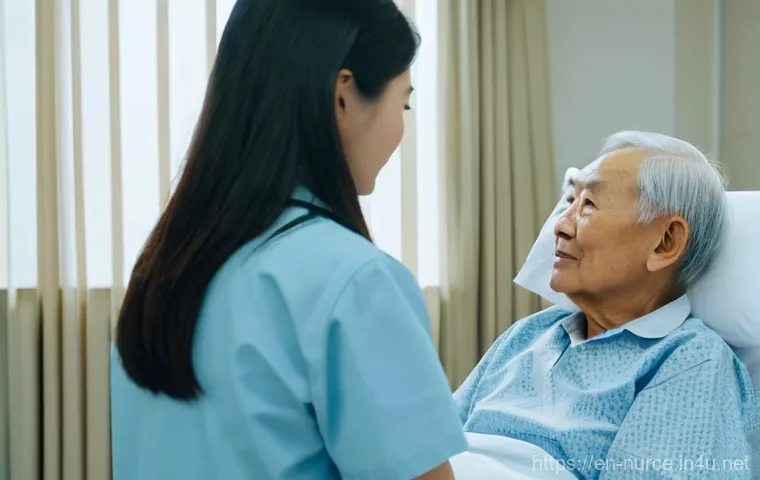
Empowering patients to be active participants in their own care is a cornerstone of modern nursing, but it’s not a one-size-fits-all approach. What empowerment means can look very different depending on a patient’s cultural background.
I’ve personally learned that simply handing someone a pamphlet or expecting them to instantly grasp complex medical terminology might not work for everyone, especially if they come from a culture where healthcare decisions are traditionally made by family or community leaders.
It’s not about forcing our concept of individual autonomy on them, but about finding ways to share information and involve them in a manner that aligns with their values.
I’ve found that taking the time to understand their perspective, and then adapting my teaching style or communication strategy, makes a world of difference.
It transforms a potentially confusing or overwhelming experience into one where the patient feels truly supported and understood, which ultimately leads to better adherence and healthier outcomes.
Autonomy and Collective Harmony: Finding the Balance
In many Western healthcare models, individual patient autonomy is highly prioritized. However, I’ve worked with countless patients from cultures where collective harmony and family consensus are far more important.
For these individuals, making a personal medical decision without consulting their family could feel disrespectful or even isolating. I recall a situation where a young woman was struggling to decide about a treatment plan, and after some gentle probing, she revealed she felt immense pressure to agree with her family’s wishes, even if they weren’t entirely her own.
My role then became about facilitating a dialogue where her voice could be heard within the family unit, and ensuring everyone understood the medical information clearly.
It’s about respecting that intricate balance between individual choice and communal responsibility, and finding a path that genuinely empowers the patient within their own cultural context.
It’s a delicate dance, but a beautiful one when successful.
Explaining Complexities with Clarity and Respect
Let’s face it, medical jargon can be baffling even for those of us in the field, so imagine how overwhelming it is for a patient, especially one who might be grappling with a language barrier or different health literacy levels.
I’ve found that breaking down complex information into digestible, simple terms, using analogies that resonate, and frequently checking for understanding is absolutely vital.
I often use the “teach-back” method, asking patients to explain instructions in their own words, which helps me gauge what they’ve truly grasped. More than that, it’s about delivering information with immense respect, regardless of their background or educational attainment.
I vividly remember a patient who came from a rural background, initially seeming disengaged during my explanation of his post-surgical care. But once I started using simpler terms and drawing diagrams, his face lit up, and he became incredibly engaged.
It taught me that clarity, combined with genuine respect, opens doors to understanding.
The Unseen Influences: Navigating Health Beliefs and Practices
As nurses, we often operate within the framework of evidence-based medicine, and it’s easy to assume that everyone shares that same foundational understanding of health and illness.
But my years on the floor have taught me that patients arrive with a rich tapestry of their own health beliefs, traditional remedies, and cultural practices that often predate or exist alongside modern medical science.
Ignoring these deeply held convictions isn’t just a missed opportunity; it can lead to mistrust and non-adherence. I’ve cared for patients who believed their illness was caused by an imbalance of “hot” and “cold” elements, or by a spiritual transgression, rather than purely biological factors.
Dismissing these beliefs outright can be incredibly alienating. Instead, I’ve learned to ask about them, with genuine curiosity and respect, trying to understand how their traditional practices fit into their overall healing journey.
It’s not about endorsing harmful practices, but about integrating what’s safe and beneficial with our medical care, or at least acknowledging their importance to the patient.
This approach truly fosters a sense of partnership and trust.
Traditional Wisdom Meets Modern Medicine
It’s an incredibly delicate balance, isn’t it? Many patients come to us having already tried traditional remedies passed down through generations, and for them, these practices hold immense significance and often a deep sense of healing.
I recall a time when a patient’s family wanted to bring in specific herbal concoctions for pain relief. Instead of immediately saying “no,” I took the time to discuss it with the doctor and the patient, carefully reviewing the ingredients for any potential interactions with prescribed medications.
While we couldn’t always accommodate every request, the act of listening and exploring options, rather than dismissing their traditions, built an incredible amount of trust.
It showed them that we valued their beliefs and were willing to work with them. This collaborative spirit, where we try to understand and, where safe, integrate traditional wisdom, can dramatically improve patient compliance and satisfaction, because they feel their entire being, not just their physical illness, is being cared for.
Perceptions of Pain and the Stigma of Illness
How we express pain, or even acknowledge it, can be profoundly shaped by our culture. What one patient might openly lament, another might stoically endure, believing it’s a sign of weakness to complain, or that the pain is a test of strength.
I’ve certainly witnessed situations where a patient’s calm demeanor led us to underestimate their pain level, only to realize later they were suffering significantly.
It’s forced me to move beyond just asking “What’s your pain on a scale of one to ten?” and instead, to observe their non-verbal cues more intently, and ask open-ended questions like, “How is this pain affecting your ability to do what you need to do?” or “What does this pain feel like to you?” Additionally, some cultures carry a heavy stigma around certain illnesses, particularly mental health conditions or certain infectious diseases.
This stigma can lead to delays in seeking care or reluctance to disclose symptoms. Being aware of these cultural nuances allows me to approach these sensitive topics with greater empathy and discretion, creating a safer space for patients to share their true experiences.
My Own Journey: Cultivating Continuous Cultural Humility as a Nurse
Being a nurse today means constantly evolving, and for me, a massive part of that evolution has been embracing cultural humility. It’s not about achieving a checklist of cultural competencies and saying, “Okay, I’m done!” No way.
I’ve personally found it’s a lifelong commitment to self-reflection, to challenging my own biases, and to continuously learning from every single patient interaction.
The healthcare landscape is constantly changing, and with it, the rich tapestry of cultures we encounter every day. I remember early in my career, I thought if I just memorized a few cultural facts, I’d be good.
But quickly, I realized that cultures are dynamic, and generalizations can actually be harmful. It’s about approaching each patient as an individual, with their unique background, and being genuinely curious and open to understanding their world.
This ongoing journey, for me, has been incredibly rewarding, making me not just a better nurse, but a more compassionate human being, truly enriching my professional and personal life in profound ways.
Self-Reflection: Checking Our Cultural Lenses
I’ve learned that the most critical tool in cultivating cultural humility isn’t a textbook; it’s my own self-awareness. We all come with our own cultural lenses, our own experiences, and yes, our own unconscious biases.
I make it a point to regularly reflect on my interactions, asking myself, “Was there anything I misunderstood? Did I make any assumptions? How might my own background have influenced my reaction?” It’s not always comfortable to confront these things, but it’s absolutely necessary.
For example, I grew up in a very direct communication style household, and I sometimes had to remind myself that not everyone values directness in the same way, especially when discussing sensitive health issues.
This ongoing self-assessment allows me to identify my blind spots and adjust my approach, ensuring that I’m not inadvertently imposing my own cultural norms onto a patient.
It’s an exercise in humility, recognizing that I don’t know everything, and that’s perfectly okay.
Learning From Every Encounter: A Two-Way Street
Every patient I encounter, every family member I interact with, is an opportunity for me to learn something new. I truly believe that cultural humility is a two-way street.
While I’m there to provide care, I’m also receiving invaluable lessons about different ways of seeing the world, different priorities, and different ways of healing.
I make it a point to listen intently to patient stories, to ask respectful questions about their traditions or beliefs (when appropriate), and to really absorb what they share.
I remember one patient taught me about the significance of a particular amulet for protection during illness, and how important it was for her to keep it near.
Before that, I might have just seen it as an ‘object,’ but through her sharing, I understood its profound spiritual meaning. These little moments of shared understanding don’t just improve patient care; they truly enrich my own life and perspective.
It’s like collecting tiny treasures of human experience, one interaction at a time, making my nursing journey so much richer.
Wrapping Things Up
Whew, what a journey we’ve taken through the incredibly rich and sometimes challenging landscape of cultural competence in patient care! It’s something that has truly shaped my entire career, and I hope by sharing these insights, you feel a bit more equipped, and perhaps even inspired, to look beyond the obvious in your own interactions. Remember, every patient brings their entire world with them into our care, and understanding that world, even just a tiny piece of it, can make all the difference in their healing. It’s an ongoing learning curve for all of us, a truly human endeavor that continuously reminds me why I fell in love with nursing in the first place. Keep those hearts open and those minds curious!
Handy Tips You’ll Find Useful
1. Always approach patient interactions with genuine curiosity and a willingness to learn; assume nothing and ask respectfully about their background and beliefs.
2. Prioritize active listening – it’s not just about hearing words, but observing body language, tone, and unspoken cues that often reveal deeper meanings.
3. Be flexible with your communication style, using simpler language, visual aids, or the “teach-back” method to ensure complex medical information is truly understood.
4. Respect personal space and cultural norms around physical touch; a simple gesture like asking permission can build immense trust and comfort.
5. Advocate for dietary and spiritual needs by collaborating with hospital staff and families to ensure patients feel seen and respected in every aspect of their care.
Important Points to Remember
Navigating the diverse cultural tapestry of healthcare truly boils down to continuous self-reflection and a commitment to cultural humility. It’s about recognizing that our own cultural lens shapes our perceptions and that every patient interaction is an opportunity for mutual learning. From the subtle nuances of eye contact and personal space to the profound impact of family dynamics, health beliefs, and traditional practices, understanding these elements transforms care from transactional to truly therapeutic. By patiently seeking to understand, adapting our approach, and integrating patient values into care plans, we foster trust, improve adherence, and ultimately create a more empathetic and effective healing environment. Remember, being a great healthcare professional isn’t just about clinical expertise; it’s about being a compassionate human first, always ready to bridge cultural gaps with an open heart and a curious mind.
Frequently Asked Questions (FAQ) 📖
Q: Why has cultural competence become such a vital part of nursing today, and what are the real benefits for both nurses and patients?
A: You know, it used to be that cultural competence felt like an “extra credit” topic in nursing school, but trust me, that’s completely changed. In our increasingly globalized world, the patient populations we serve are incredibly diverse, reflecting a beautiful tapestry of backgrounds, beliefs, and values.
This isn’t just a trend; it’s our reality, and it’s why cultural competence isn’t just important, it’s absolutely crucial for delivering truly outstanding patient-centered care.
For us nurses, embracing cultural competence means we’re better equipped to understand our patients’ unique perspectives on health and illness, their communication styles, and even their preferences for family involvement in care.
I’ve seen firsthand how a lack of this understanding can lead to misunderstandings, delayed treatments, or even patients feeling disrespected and withdrawing from care.
But when we approach care with cultural humility—a lifelong commitment to self-reflection and learning from our patients—we can build stronger therapeutic relationships that genuinely make a difference.
The benefits are huge. For patients, it means they feel seen, heard, and respected as individuals, not just a diagnosis. This fosters trust, which is the cornerstone of effective healthcare.
When patients trust us, they’re more likely to communicate openly, adhere to treatment plans, and actively participate in their own care, leading to better health outcomes and increased satisfaction.
Think about it: a patient who feels understood is a patient more likely to thrive. For us, it enhances our professional satisfaction, reduces the risk of errors related to cultural misunderstandings, and honestly, it just makes nursing a more rewarding experience when you know you’re connecting on a deeper level.
It’s about creating a safe and inclusive environment where everyone feels valued.
Q: What are some of the most common challenges nurses face when providing care to diverse patient populations, and what practical strategies can we use to overcome them?
A: Oh, where do I even begin? When you’re on the floor, caring for people from all walks of life, you quickly realize that diversity, while incredibly enriching, also presents its own set of unique hurdles.
I’ve certainly had my share of moments where I’ve felt a bit stumped, and I bet you have too! One of the biggest challenges we often encounter is language barriers.
It’s tough to provide the best care when you can’t communicate clearly, right? Misunderstandings due to language can unfortunately lead to misdiagnoses or inappropriate treatments, and nobody wants that.
Then there are differing beliefs about health, illness, and treatment, which can sometimes conflict with Western medical practices. I’ve seen situations where a patient’s family traditions dictated their care choices in ways that were initially baffling to me.
Resource limitations, like not always having immediate access to qualified interpreters or culturally appropriate educational materials, can also throw a wrench in things.
And let’s be honest, sometimes our own unconscious biases can sneak in, making it harder to connect authentically. So, what can we do? First, let’s be proactive about communication.
Always use professional medical interpreters when there’s a language barrier; relying on family members for translation isn’t ideal and can compromise accuracy and privacy.
I always try to speak clearly and use plain, jargon-free language. Beyond that, embrace cultural humility! It means being curious and asking open-ended questions about a patient’s beliefs, customs, and preferences without judgment.
I learned that simply saying, “Tell me what’s important to you regarding your health and care,” can open up incredible dialogue. Seeking out cultural training and continuous education is also super helpful, and many facilities offer great resources for this.
And don’t forget your colleagues! Learning from nurses from different backgrounds or even just discussing challenging cases with your team can provide invaluable insights and strategies to navigate these diverse situations more effectively.
It’s all about a commitment to continuous learning and adaptation.
Q: How can nurses effectively build genuine trust and rapport with patients from vastly different cultural backgrounds to ensure they feel truly cared for and respected?
A: Building trust is, in my opinion, the absolute heart of nursing, especially when we’re connecting with patients from diverse cultural backgrounds. It’s not always easy, but it’s incredibly rewarding.
I’ve found that it often boils down to a series of small, intentional acts that show you genuinely care and respect their unique identity. First, start with the basics: learn how to correctly pronounce their name.
It’s a simple gesture, but it instantly makes a person feel seen and valued, rather than just another patient in a room. Active listening is another powerhouse strategy; truly hear what your patients are saying, not just with your ears but with your whole presence.
Make eye contact, nod, and avoid interrupting. This shows you’re engaged and taking their concerns seriously. I’ve learned to be extra mindful of non-verbal cues and personal space, as these vary greatly across cultures.
Sometimes a gentle touch on the arm is comforting, other times it might be inappropriate, so always err on the side of caution or ask for permission. Respecting their family structures and involving them in care decisions, where appropriate and culturally customary, can also build immense trust.
Always explain what you’re doing, even for routine tasks, using clear, simple language, and avoid medical jargon that can confuse anyone, let alone someone with a different linguistic background.
And here’s a tip I’ve personally found invaluable: be transparent. If you don’t know the answer to something, it’s okay to admit it and then commit to finding out.
Honesty fosters reliability, and reliability builds trust. Ultimately, it’s about approaching every interaction with an open mind, a curious spirit, and a deep-seated desire to understand and provide the best care possible.
When you do that, trust naturally follows.